

When Did Patereon Get So Big On Youtube
T he internet has transformed creative industries. Words, music, video, images and games tin exist distributed worldwide, instantly and for gratis, delivering a cornucopia of delights to your screens and mine. The problem is that, historically, it's not been quite so good at ensuring those same creative industries become paid. Ad-supported media did the task quite well, until a couple of years agone, when it suddenly didn't. Streaming services seem to be making a lot of money for someone, but that someone is rarely the creators who exist on those platforms.
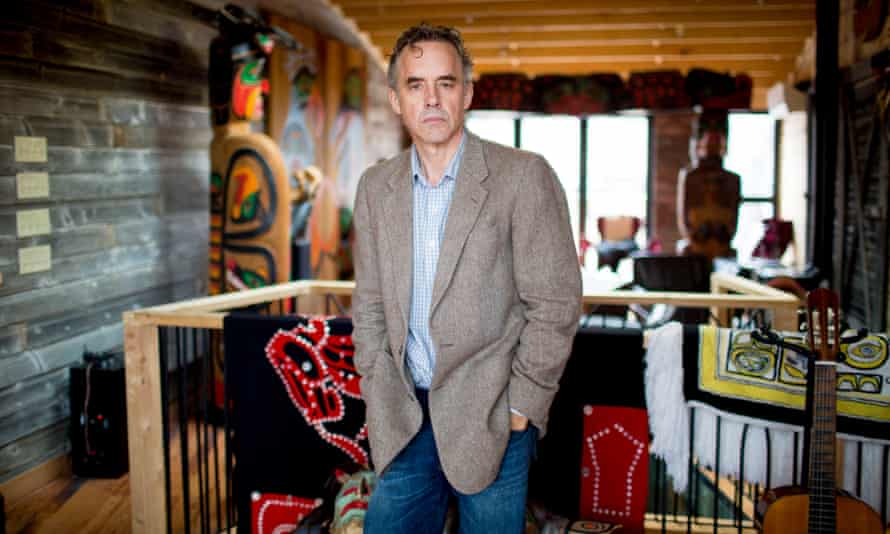
All of which goes some way to explaining the surprise (and jealousy?) that accompanied the news that Hashemite kingdom of jordan B Peterson, the alt-right'south favourite psychologist and dispenser of such advice equally "stand up straight", is making just under $1m a year online, thank you to the support of some 9,500 fans on the membership service Patreon.
In fact, Peterson is not fifty-fifty the most successful creator on the site; that laurels goes to the leftwing American podcast Chapo Trap House, which pulls in just shy of $100,000 a month from 22,040 "patrons".
Those success stories, at opposite ends of the political spectrum, highlight the repose growth of Patreon from a final-ditch endeavour on the function of a YouTube musician to earn a living, to the economic infrastructure underpinning a substantial clamper of the indie net.
The service was started in May 2013 by Jack Conte and his old college roommate Sam Yam. Conte was a fairly successful YouTube musician at the time. His solo YouTube channel had more 150,000 subscribers, gathering a million views a calendar month on his frequent releases, and every bit i half of the band Pomplamoose he had collaborated with the likes of Ben Folds and Nick Hornby. But despite that, he was taking dwelling house just $50 a month from the site. "We're talking about a football game-sized field of fans who love someone's content, can't wait to see the next blog or make the next recipe," he told National Public Radio at the fourth dimension. "And the artist is making perhaps $fifty a calendar month off of it. It'south outrageous, and really information technology doesn't add together up at all."
Patreon was the answer. Rather than focusing on the millions who watched his videos, or even the hundreds of thousands who liked him enough to hit "subscribe" on YouTube itself, the goal was to convince but a few hundred of his biggest fans to open their wallets and manus over a modest amount of greenbacks, on a recurring footing, to fund his continued creative activities.
In the stop, ironically, those fans ended upwardly doing the reverse. Past early on 2014, when thousands of patrons were giving him more than $vii,000 for each new video, it was clear that the site was something that could underpin a new sort of online economy – and also something that was then big that running it wasn't compatible with being an indie musician.
And now it'southward bigger still. On the date of its 5th ceremony, the visitor employs 140 people from its San Francisco offices, hosting 100,000 creators who are supported by two million patrons. Since its foundation, it has paid out more than than $350m, and this year alone it's on course to pay out "well over $300m", according to a spokesperson; twice what it distributed in 2017.
(Keen readers will note the similarity to the membership model employed here at the Guardian, which Patreon executive Colin Sullivan, who heads the site's legal and trust and condom teams, hasn't missed: "I call up if nothing else, it's a great validating feeling, to encounter other actually established outlets switch over to this model," he says.)
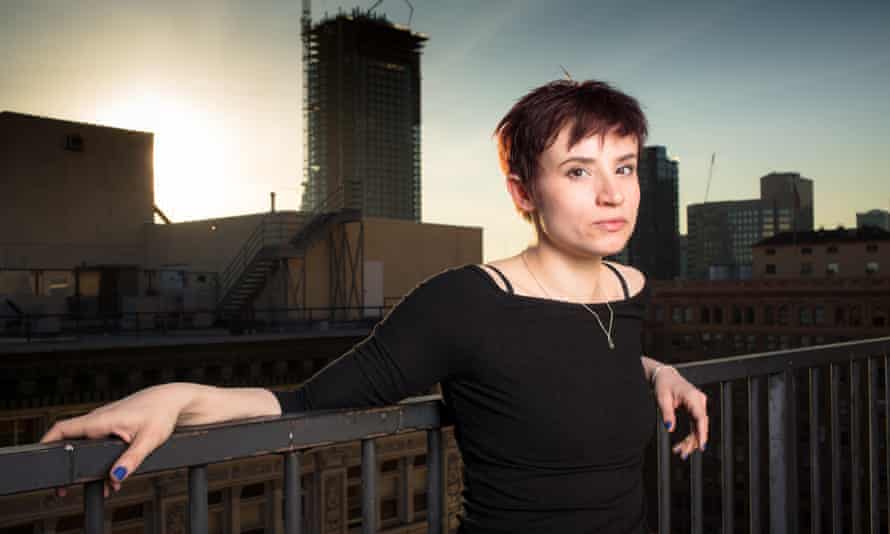
Writer Laurie Penny is one of those receiving support from her fans on the site (625 patrons, giving $4,146 a month). She signed upwardly in January 2017 although, she says, "It took me virtually ii years from first seriously considering information technology to giving information technology a go. I felt weird about openly asking for money in a way that may be cultural, that may be gendered, I don't know. But so I figured my audience has always been online, and the customs I write for, it would be much better to be appreciative to a broad range of people who like my work, rather than be beholden to the whim of an individual editor, or two or three.
"What it has meant for me in the terminal year and a half is that I've been able to exercise research and deep piece of work that I had never considered before. I'grand wrapping upward a book right now, which I certainly wouldn't have had fourth dimension to do."
Penny is, past the standards of the site, quite an one-time-school user: her patrons are by and large supporting the work she's doing elsewhere, rather than paying for access to annihilation in particular. "I had big, involved plans for writing for Patreon first," she says, but personal circumstances nixed those plans shortly after her entrada launched. "I was honest with my community, and they were like, 'We're here to support your writing, it's because we like what you lot're doing. We're not paying for a product, we're paying to see what you can practice with this.' Which was, once again, astonishing to me."
The tension between "supporting" and "subscribing" to creators has been ever present on Patreon, however. Kickstarter, another crowdfunding platform, had to accept that as it grew, not everyone wanted to paw coin over to people they liked with few strings attached: some wanted to just buy stuff. Patreon has faced similar tussles, and recently changed how it describes itself from a "crowdfunding" platform to a "membership" 1.
"The thinking effectually it was that creators in general desire to feel like they're getting paid for putting something of value out into the world," says Sullivan. "Nosotros noticed with the crowdfunding model sometimes it feels a piddling more like people were begging for money, and information technology doesn't feel great equally a creator to exist begging for money rather than asking to become paid for something of value that they're putting out.
"And and so the switch to membership is acknowledging that fact, and that information technology'due south not but asking for coin, it's receiving payment for something."
Of grade, helping proceed the lights on and the rent paid isn't the whole story. If it was, at least some of Peterson'southward supporters may accept hesitated before bumping his income past some other $1m a year. The shift from a "tip jar" approach to one more focused on, as Sullivan says, a "value exchange" helps: Peterson offers straight Q&Equally for supporters, as well as a supporter-only mailing list. Similarly, fifty-fifty if information technology isn't a simple trade, an increasing number of people abide by a crude moral code online: if you like it, pay for it (even if yous don't take to). Peterson ends some of his videos by asking his fans to back up him on Patreon, and sure plenty, some of his fans support him on Patreon.
Then there are the aspects that are unique to Peterson's audience. Penny notes that the right today "are extremely entrepreneurial. It's gig economy extremism … If Jordan Peterson is winning, that's one in the centre for the 'social justice warriors' and people like me."
As much as payment is, plain, crucial, for many creators the site is simply equally of import for allowing super-fans to identify themselves, and stand out from the oversupply. Writer and journalist Zoe Margolis, who launched her Patreon earlier this twelvemonth, describes it as a way of regaining some of the personal connections she used to have when writing her pseudonymous sex blog, Girl With a One Track Listen.
"I think the stuff that I've posted that's undercover, that merely people contributing tin run into, is more personal stuff – how neurotic I am, how boring life might be. Basically, the daily weblog-type stuff: the things people used to follow me for.
"I hateful obviously I used to write a sexual practice weblog … just anyone who has read enough of my web log would know it wasn't just sex, it was neuroses and all the rest. That'south why people connected with it: because I'chiliad human being, I accept flaws, and that's what I put out on the page so honestly. It's very honest blogging. And that I wouldn't post out to the globe."
That clubbish feeling may still be 1 of Patreon'south greatest strengths as its growth attracts competition. Kickstarter recently acquired a Patreon clone, Drip, while other companies are applying concepts of membership more loosely – video game streaming site Twitch lets users sell "subscriptions" to their viewers, offering a similar sense of belonging. But, Sullivan notes, "In that location'south something to be said for existence independent. As a creator, yous are often using multiple platforms: if you lot have to limit your activities to but one, it's not very natural."
Equally Patreon grows, it will inevitably face new issues. Already, as the presence of Peterson suggests, it's having to come up to terms with the fact that "creator" has the sort of broad definition that can be applied to YouTube shock-jocks, porn game developers and camgirls, just equally it can to musicians, artists and writers. "We don't have an explicit purlieus" about what it takes to be a creator, Sullivan says. "We don't want to, because and then y'all start making decisions around what is art, what is creativity."
Merely it has probably already solved the hardest challenge it will ever face: simply getting people on the net to open their wallets, enter their credit menu details, and pay for content. Compared to that, everything else is pocket-size fry.
Source: https://www.theguardian.com/technology/2018/may/14/patreon-rise-jordan-peterson-online-membership
Posted by: jacobsenthot1984.blogspot.com
0 Response to "When Did Patereon Get So Big On Youtube"
Post a Comment